Complete Guide to Finasteride for Hair Loss
4,042 words·Compiled from cited medical literature·Not medical advice
On this page 16 sections
- Who It's For
- Who It's NOT For
- What is Finasteride?
- How Finasteride Works: The DHT Connection
- FDA Approval and Evidence
- Efficacy: What the Research Shows
- Timeline: When to Expect Results
- Dosing: How to Take Finasteride
- Side Effects: Understanding the Risks
- Sexual Side Effects: A Closer Look
- Who Should NOT Take Finasteride
- Finasteride vs Other Treatments
- Combining Finasteride with Other Treatments
- Getting Finasteride: Prescription and Cost
- Long-Term Use: What to Expect
- FAQs
Medical Disclaimer: This content is for informational purposes only and is not a substitute for professional medical advice, diagnosis, or treatment. Always consult a qualified healthcare provider before starting any medication.
Who It's For#
- Men experiencing early to moderate male pattern baldness
- Men who want to preserve existing hair before it's lost
- Those willing to commit to daily, long-term medication
- Men who have consulted with a healthcare provider about their hair loss
- Individuals looking for an evidence-based, FDA-approved treatment
Who It's NOT For#
- Women (finasteride is not FDA-approved for female hair loss)
- Pregnant women or those who may become pregnant (causes birth defects)
- Men under 18 years old
- Those with liver disease or abnormal liver function
- Men who cannot commit to daily, indefinite use
- Individuals with a history of severe depression (discuss with doctor first)
What is Finasteride?#
Finasteride is a prescription medication that represents one of only two FDA-approved treatments for male pattern hair loss, alongside minoxidil. Originally developed to treat enlarged prostate glands at a 5 mg dose (marketed as Proscar), researchers discovered that a lower 1 mg dose effectively treated hair loss, leading to FDA approval of Propecia in December 1997.
Unlike topical treatments that work on the scalp surface, finasteride works systemically by targeting the hormonal pathway responsible for hair loss. This makes it uniquely effective at addressing the root cause of androgenetic alopecia rather than simply stimulating hair growth.
The medication is available as a generic, making it significantly more affordable than the brand-name version. Most men take it as a small tablet once daily, and it can be prescribed by dermatologists, primary care physicians, or through telehealth platforms.
What sets finasteride apart from other hair loss treatments is its mechanism: it doesn't just encourage hair growth—it actively prevents the hormonal process that causes hair follicles to shrink and eventually stop producing visible hair.
How Finasteride Works: The DHT Connection#
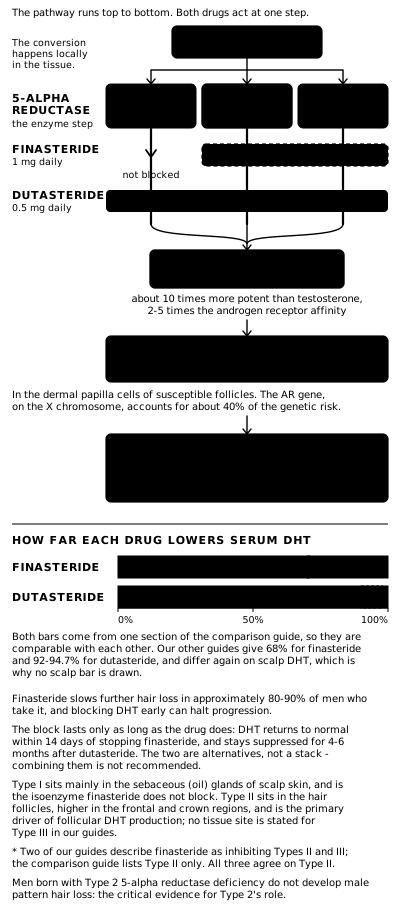
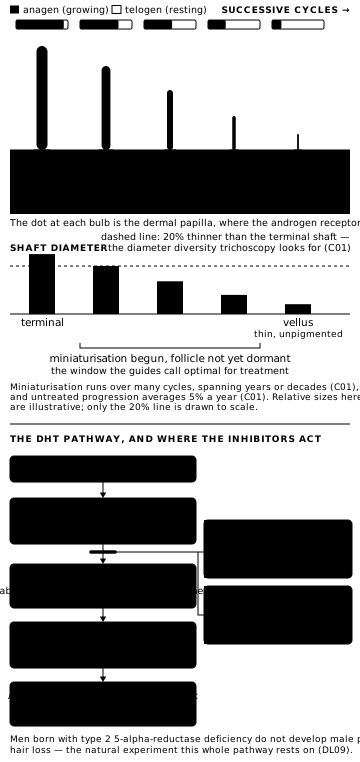
To understand how finasteride works, you need to understand DHT (dihydrotestosterone) and its role in hair loss. DHT is an androgen hormone derived from testosterone through the action of an enzyme called 5-alpha reductase. While DHT plays important roles during male development, in genetically susceptible individuals, it binds to receptors in scalp hair follicles and triggers a process called miniaturization.
Miniaturization causes hair follicles to progressively shrink over successive growth cycles. Terminal hairs—the thick, pigmented hairs on your head—gradually become vellus-like hairs: thin, short, and barely visible. Eventually, the follicle may stop producing visible hair altogether.
Finasteride works by inhibiting Type II and Type III 5-alpha reductase enzymes, which are highly concentrated in hair follicles. By blocking these enzymes, finasteride reduces the conversion of testosterone to DHT. Research shows that finasteride 1 mg daily reduces scalp DHT levels by approximately 64% and serum DHT levels by 68%.
This reduction in DHT allows affected hair follicles to recover from miniaturization. Follicles that haven't been completely dormant can begin producing thicker, longer hairs again. However, completely dead follicles cannot be revived—which is why early intervention with finasteride produces better results than waiting until significant baldness has occurred.
The evidence supporting this mechanism is compelling: men who are genetically deficient in Type II 5-alpha reductase do not develop male pattern baldness, demonstrating the critical role DHT plays in this condition.
FDA Approval and Evidence#
The FDA approved finasteride 1 mg (Propecia) on December 19, 1997, specifically for treating androgenetic alopecia in men. This approval was based on rigorous clinical trials demonstrating both safety and efficacy.
The pivotal clinical trials involved over 1,500 men with mild to moderate hair loss at the vertex (crown) and anterior mid-scalp regions. These studies used objective measurements including hair counts, photographic assessments, and patient self-assessments to evaluate results.
It's important to note what finasteride is and isn't approved for:
FDA-Approved Uses:
- Male pattern hair loss (androgenetic alopecia) in men only
- Treatment of vertex and anterior mid-scalp hair loss
Not FDA-Approved For:
- Hair loss in women
- Bitemporal recession (receding temples specifically)
- Hair loss from other causes (alopecia areata, telogen effluvium, etc.)
The FDA label includes warnings about sexual side effects and notes that these may persist after discontinuation in some cases. In 2011, the FDA added depression to the label based on post-marketing reports.
Despite these warnings, finasteride remains one of the most thoroughly studied hair loss treatments available, with decades of clinical data supporting its use.
Efficacy: What the Research Shows#
The clinical evidence for finasteride's effectiveness is robust and consistent across multiple studies. Here's what the research demonstrates:
Hair Count Improvements: In landmark clinical trials, men taking finasteride 1 mg daily showed significant increases in hair count compared to placebo. At one year, finasteride users had an average of 107 more hairs in the measured area compared to placebo. At two years, this increased to 138 more hairs.
Slowing Hair Loss: The American Academy of Dermatology reports that finasteride slows down further hair loss in approximately 80-90% of men who take it. This means even if you don't experience dramatic regrowth, the medication is likely preventing additional loss.
Promoting Regrowth: Research indicates that finasteride promotes actual hair regrowth in about 48% of men at 12 months and 66% at 48 months. This regrowth tends to be most noticeable in men who start treatment early, when hair loss first becomes apparent.
Long-Term Results: Five-year studies show that men who continue taking finasteride maintain hair counts above their baseline, while men on placebo experience progressive loss. Maximum improvement typically occurs around the two-year mark, after which results stabilize.
Real-World Outcomes: Clinical trials measure efficacy under controlled conditions. In practice, results vary based on factors including:
- Stage of hair loss at treatment initiation
- Consistency of medication use
- Individual response to treatment
- Location of hair loss (vertex responds better than hairline)
The most important predictor of success appears to be early intervention—starting finasteride when you first notice thinning produces better outcomes than waiting until significant baldness has occurred.
Timeline: When to Expect Results#
One of the most common questions about finasteride is how long it takes to work. Understanding the timeline helps set realistic expectations and prevents premature discontinuation.
Months 1-3: The Waiting Period During the first few months, you likely won't notice visible changes. Finasteride is working at the follicular level, but the effects take time to manifest as visible hair changes. Some men experience an initial "shedding phase" as weaker hairs fall out to make room for stronger growth—this is normal and not a sign the medication isn't working.
Months 4-6: Early Signs Around the four-month mark, many men begin noticing that their hair loss has slowed. Existing hairs may appear slightly thicker or more robust. The American Academy of Dermatology notes that it typically takes about 4 months to notice any improvement.
Months 6-12: Visible Progress Between six months and one year, improvements become more noticeable. Studies show that 48% of men experience visible regrowth by the 12-month mark. Hair may appear denser, and areas of thinning may show improvement.
Year 1-2: Peak Results Maximum benefit from finasteride typically occurs around the two-year mark. Research indicates that 66% of men show regrowth by 48 months, suggesting continued improvement beyond the first year.
Year 2+: Maintenance After reaching peak results, the goal shifts to maintenance. With continued use, finasteride maintains hair counts above baseline. Stopping the medication results in return of hair loss, typically within 12 months of discontinuation.
Key Timeline Takeaways:
- Don't judge results before 6-12 months of consistent use
- Initial shedding is normal and temporary
- Maximum results require 2 years of continuous treatment
- Stopping finasteride reverses its benefits
Dosing: How to Take Finasteride#
Finasteride dosing for hair loss is straightforward, but following the correct protocol maximizes effectiveness.
Standard Dose: The FDA-approved dose for male pattern hair loss is 1 mg taken orally once daily. This is significantly lower than the 5 mg dose used for prostate conditions.
Timing: Take finasteride at approximately the same time each day. Whether morning or evening doesn't matter, but consistency helps maintain stable hormone levels and makes it easier to remember.
With or Without Food: Finasteride can be taken with or without food—absorption isn't significantly affected by meals.
Missed Doses: If you miss a dose, take it as soon as you remember unless it's almost time for your next dose. Don't double up to make up for missed doses.
Tablet Handling:
- Swallow tablets whole
- Do not crush, break, or chew tablets
- Women who are or may become pregnant should not handle crushed or broken tablets due to risk of absorption through skin
Duration of Treatment: Finasteride must be taken continuously to maintain results. It's not a "cure" for hair loss—stopping the medication allows DHT levels to return to normal, and hair loss resumes. Most men who benefit from finasteride commit to indefinite use.
Generic vs. Brand: Generic finasteride is bioequivalent to brand-name Propecia and significantly less expensive. The FDA requires generics to meet the same standards for safety and efficacy.
Side Effects: Understanding the Risks#
Like all medications, finasteride carries potential side effects. Understanding these risks helps you make an informed decision and know what to discuss with your healthcare provider.
Common Side Effects (occurring in >1% of users): Based on clinical trial data, the following side effects occurred more frequently in finasteride users compared to placebo:
| Side Effect | Finasteride | Placebo |
|---|---|---|
| Any sexual adverse event | 4.2% | 2.2% |
| Decreased libido | 1.9% | 1.3% |
| Erectile dysfunction | 1.4% | 0.9% |
| Decreased ejaculate volume | 1.0% | 0.4% |
Less Common Side Effects:
- Breast tenderness or enlargement (gynecomastia)
- Skin rash
- Testicular pain
- Depression or mood changes
Important Context: The difference between finasteride and placebo groups is relatively small—about 2% more men experience sexual side effects on finasteride than on placebo. A meta-analysis found that finasteride 1 mg daily carries a 1.66-fold relative risk of sexual adverse effects compared to placebo.
Resolution of Side Effects: In clinical trials, side effects that occurred during treatment resolved in most men who discontinued finasteride. They also resolved in many men who continued treatment.
The Nocebo Effect: Research suggests that awareness of potential side effects influences their reported frequency. In one study, men who were informed about possible sexual side effects reported them at three times the rate (43.6%) of men who weren't informed (14.3%), suggesting psychological factors play a role.
Sexual Side Effects: A Closer Look#
Sexual side effects deserve special attention given their importance to many men considering finasteride. Here's a detailed, evidence-based examination.
What the Clinical Trials Show: In the original clinical trials of over 1,500 men, sexual adverse events occurred in 4.2% of finasteride users versus 2.2% on placebo—a difference of about 2 percentage points. These included decreased libido, erectile difficulties, and reduced ejaculate volume.
Post-Marketing Reports: After finasteride's widespread use, reports emerged of sexual side effects persisting after discontinuation in some men. This led the FDA to update the label in 2011 and again in 2012 to note that sexual dysfunction may continue after stopping the medication.
The Controversy: The medical community remains divided on "post-finasteride syndrome"—a proposed condition involving persistent sexual, neurological, and psychological symptoms. Key points in this debate:
- Many reports come from self-selected populations on internet forums, which may introduce selection bias
- Controlled studies have difficulty separating drug effects from psychological factors
- Some researchers argue the evidence doesn't support a distinct syndrome
- Others maintain that persistent effects represent a real phenomenon requiring further study
Risk-Benefit Considerations: When evaluating sexual side effect risk:
- Most men (>95%) don't experience sexual side effects
- Of those who do, many find effects resolve with continued use or discontinuation
- Persistent effects appear to occur in a small subset of users
- Individual risk factors for persistent effects aren't well established
What to Discuss with Your Doctor: Before starting finasteride, discuss:
- Your current sexual function
- Any history of depression or anxiety
- Your comfort level with the known risks
- Whether the benefits outweigh potential risks for your situation
Who Should NOT Take Finasteride#
Certain individuals should avoid finasteride entirely, while others should proceed with caution.
Absolute Contraindications:
Women: Finasteride is not approved for women and should never be taken by women who are or may become pregnant. The medication can cause birth defects in male fetuses, specifically affecting development of external genitalia.
Children: Finasteride is not approved for use in patients under 18 years old. Safety and efficacy haven't been established in this population.
Hypersensitivity: Anyone with a known allergy to finasteride or any component of the formulation should not take it.
Relative Contraindications (Use with Caution):
Liver Disease: Finasteride is metabolized by the liver. Patients with liver function abnormalities may have elevated finasteride levels and should be monitored closely or avoid the medication.
History of Depression: Given reports of depression and mood changes with finasteride use, men with a history of depression should discuss risks carefully with their healthcare provider and be monitored during treatment.
Men Planning to Father Children: While studies haven't conclusively shown that finasteride affects fertility or causes birth defects through semen exposure, some men choose to discontinue finasteride when actively trying to conceive. Discuss this with your doctor.
Special Considerations:
PSA Testing: Finasteride reduces PSA (prostate-specific antigen) levels by approximately 50%. If you're undergoing prostate cancer screening, your doctor needs to know you're taking finasteride to properly interpret PSA results.
Blood Donation: Due to risk of exposure to pregnant women, men taking finasteride should not donate blood until at least one month after stopping the medication.
Finasteride vs Other Treatments#
Understanding how finasteride compares to other hair loss treatments helps determine the best approach for your situation.
Finasteride vs. Minoxidil:
| Factor | Finasteride | Minoxidil |
|---|---|---|
| Mechanism | Blocks DHT production | Stimulates hair growth directly |
| Administration | Oral (pill) | Topical (liquid/foam) |
| Prescription | Required | Over-the-counter |
| FDA Approved | Men only | Men and women |
| Primary Benefit | Prevents further loss | Stimulates regrowth |
| Side Effects | Sexual, systemic | Scalp irritation, unwanted facial hair |
The two treatments work through different mechanisms and are often used together for enhanced results.
Finasteride vs. Dutasteride:
Dutasteride inhibits both Type I and Type II 5-alpha reductase, while finasteride primarily targets Type II. This results in greater DHT reduction (>90% vs ~70% for finasteride). Some studies suggest dutasteride may be slightly more effective, but it's not FDA-approved for hair loss and carries a higher risk of sexual side effects.
Finasteride vs. Low-Level Laser Therapy:
LLLT devices (laser caps, combs) are FDA-cleared for hair loss and work through a completely different mechanism—stimulating cellular activity in hair follicles. They can be used alongside finasteride but generally show more modest results in studies.
Finasteride vs. PRP:
Platelet-rich plasma injections involve drawing blood, concentrating platelets, and injecting them into the scalp. Evidence is promising but less robust than for finasteride. PRP is not FDA-approved for hair loss and requires repeated treatments.
Finasteride vs. Hair Transplant:
Hair transplantation is a surgical solution that moves hair from donor areas to balding areas. It provides permanent results but:
- Is significantly more expensive
- Requires good donor hair density
- Works best when combined with finasteride to protect non-transplanted hair
Most hair transplant surgeons recommend finasteride before and after transplantation.
Combining Finasteride with Other Treatments#
Many men achieve optimal results by combining finasteride with other treatments. Here's what the evidence says about combination approaches.
Finasteride + Minoxidil:
This is the most common and well-studied combination. The treatments work synergistically:
- Finasteride prevents DHT-driven hair loss
- Minoxidil stimulates growth independent of DHT
Studies consistently show that combination therapy produces better results than either treatment alone. Men who haven't achieved satisfactory results with finasteride alone often see improvement after adding minoxidil.
Finasteride + Ketoconazole Shampoo:
Ketoconazole, found in anti-dandruff shampoos like Nizoral, has mild anti-androgenic properties. Some dermatologists recommend using ketoconazole shampoo 2-3 times weekly as an adjunct to finasteride. While evidence is limited, it may provide modest additional benefit with minimal risk.
Finasteride + Microneedling:
Microneedling creates controlled micro-injuries in the scalp, potentially enhancing absorption of topical treatments and stimulating growth factors. Early research suggests it may boost results when combined with minoxidil, and some practitioners recommend it alongside finasteride-minoxidil regimens.
Finasteride + Low-Level Laser Therapy:
LLLT can be safely combined with finasteride. The treatments work through entirely different mechanisms, so there's no interference. Some men use laser caps or combs as a third component of their regimen.
Combination Protocol Tips:
- Start with one treatment first to assess individual response
- Add treatments gradually to identify what's working
- Give each addition 6-12 months to evaluate effectiveness
- Document progress with consistent photos
Getting Finasteride: Prescription and Cost#
Finasteride requires a prescription in the United States and most other countries. Here's what you need to know about obtaining and affording the medication.
Getting a Prescription:
Traditional Route:
- Schedule an appointment with a dermatologist or primary care physician
- Discuss your hair loss concerns and medical history
- If appropriate, receive a prescription
- Fill at a local pharmacy or by mail order
Telehealth Options: Several telehealth platforms now offer finasteride prescriptions after online consultations. This approach:
- May be more convenient and faster
- Often includes the cost of medication in subscription pricing
- Still involves evaluation by a licensed healthcare provider
Cost Considerations:
Brand vs. Generic:
- Brand-name Propecia: Often $70-90+ per month
- Generic finasteride: Typically $10-30 per month
- Generic is bioequivalent and recommended for cost savings
Ways to Save:
- Use generic finasteride instead of brand-name
- Compare prices across pharmacies (prices vary significantly)
- Check manufacturer coupons and patient assistance programs
- Consider 90-day supplies for better per-pill pricing
- Some telehealth subscriptions offer competitive pricing
Insurance Coverage: Most insurance plans consider finasteride for hair loss a cosmetic treatment and don't cover it. However:
- Generic pricing makes it affordable even without insurance
- Some flexible spending accounts (FSA) or health savings accounts (HSA) may cover it
- Check with your insurer about their specific policies
Long-Term Use: What to Expect#
Committing to finasteride means committing to long-term, potentially lifelong use. Here's what that looks like in practice.
Maintenance Phase: After reaching peak results (typically around year 2), you enter a maintenance phase. The goal shifts from improvement to preservation. With consistent use, most men maintain their hair count above where they started.
Long-Term Safety: Five-year clinical trials established finasteride's long-term safety profile. The medication has now been used for over 25 years, with no significant new safety concerns emerging in that time. However, long-term users should:
- Maintain regular check-ups with their healthcare provider
- Report any new or worsening side effects
- Continue monitoring for prostate health (finasteride affects PSA levels)
What Happens If You Stop: Discontinuing finasteride allows DHT levels to return to normal. Hair loss typically resumes within 12 months of stopping, and any gains made while on the medication are gradually lost. This is why most men who benefit from finasteride continue taking it indefinitely.
Aging Considerations: As you age, hair loss may progress despite finasteride use, though typically more slowly than without treatment. Some men find that finasteride becomes less effective over many years, while others maintain good results for decades.
Reassessing Treatment: Periodically reassess whether continued use makes sense for you:
- Are you still seeing benefit?
- Do the benefits still outweigh any side effects?
- Have your goals or priorities changed?
- Should you add or modify other treatments?
FAQs#
How long do I need to take finasteride?#
Finasteride must be taken continuously to maintain results. Stopping the medication allows hair loss to resume, typically within 12 months. Most men who benefit from finasteride take it indefinitely.
Can I take finasteride every other day instead of daily?#
Some men do take finasteride every other day to reduce cost or potential side effects, though this isn't the FDA-approved dosing. Studies suggest every-other-day dosing may still provide benefit, but discuss this approach with your doctor.
Will finasteride regrow all my hair?#
Finasteride is most effective at preventing further loss and producing moderate regrowth. It works best in areas of thinning rather than completely bald areas. About 48-66% of men experience some regrowth, but complete restoration isn't typical.
Is topical finasteride better than oral?#
Topical finasteride delivers the medication directly to the scalp with less systemic absorption. Studies show similar efficacy to oral finasteride with potentially fewer side effects. However, it's not yet FDA-approved and may be harder to obtain.
Can finasteride cause permanent sexual side effects?#
While most men who experience sexual side effects find they resolve after stopping finasteride, reports exist of persistent effects in a small subset of users. The true incidence of persistent effects remains debated in the medical community.
Will finasteride work for my receding hairline?#
Finasteride is FDA-approved for vertex (crown) and anterior mid-scalp hair loss. It may help slow recession, but efficacy for hairline specifically is less established. Many men use finasteride along with hair transplantation to address the hairline.
How do I know if finasteride is working?#
Track your progress with consistent photos taken in the same lighting and angles. Look for slowed loss, maintained density, or regrowth over 6-12 months. Your dermatologist may use tools like trichoscopy to assess progress objectively.
Can women take finasteride for hair loss?#
Finasteride is not FDA-approved for women and is contraindicated in women who are or may become pregnant due to risk of birth defects. Some doctors prescribe it off-label to post-menopausal women, but this requires careful evaluation.
References
- Kaufman KD, et al. Finasteride in the treatment of men with androgenetic alopecia. J Am Acad Dermatol. 1998. PubMed
- Kaufman KD, et al. Long-term (5-year) multinational experience with finasteride 1 mg in the treatment of men with androgenetic alopecia. Eur J Dermatol. 2002. PubMed
- U.S. Food and Drug Administration. PROPECIA (finasteride) tablets label. 2022. FDA
- Zito PM, Bistas KG, Syed K. Finasteride. StatPearls. 2024. NCBI
- American Academy of Dermatology. What is male pattern hair loss, and can it be treated? AAD
- Traish AM, et al. Finasteride, not tamsulosin, increases severity of erectile dysfunction and decreases testosterone levels in men with benign prostatic hyperplasia. Horm Mol Biol Clin Investig. 2015. PMC
- Gupta AK, et al. Treatment of Androgenetic Alopecia: Current Guidance and Unmet Needs. Clin Cosmet Investig Dermatol. 2023. PMC
- Mella JM, et al. Efficacy and Safety of Finasteride Therapy for Androgenetic Alopecia: A Systematic Review. Arch Dermatol. 2010. JAAD70007-6/abstract)
- Piraccini BM, et al. Efficacy and safety of topical finasteride spray solution for male androgenetic alopecia: a phase III, randomized, controlled clinical trial. J Eur Acad Dermatol Venereol. 2022. PubMed
- Liu L, et al. Adverse Sexual Effects of Treatment with Finasteride or Dutasteride for Male Androgenetic Alopecia: A Systematic Review and Meta-analysis. Acta Derm Venereol. 2019. Acta Derm Venereol
Medical Disclaimer: This content is for informational purposes only and is not a substitute for professional medical advice, diagnosis, or treatment. Always consult a qualified healthcare provider before starting any medication.