Dutasteride vs Finasteride: Which Is Better for Hair Loss?
3,683 words·Compiled from cited medical literature·Not medical advice
On this page 16 sections
- Who It's For
- Who It's NOT For
- What is Dutasteride?
- Finasteride vs Dutasteride: Key Differences
- Mechanism Comparison: How Each Works
- DHT Reduction: The Numbers
- Efficacy: What the Research Shows
- Head-to-Head Clinical Trial Results
- Timeline: Results with Each Medication
- Side Effects Comparison
- Half-Life and Dosing Implications
- FDA Status and Off-Label Use
- When to Choose Dutasteride Over Finasteride
- Switching from Finasteride to Dutasteride
- Cost and Availability Comparison
- FAQs
Medical Disclaimer: This content is for informational purposes only and is not a substitute for professional medical advice, diagnosis, or treatment. Always consult a qualified healthcare provider before starting any medication.
Who It's For#
- Men who haven't achieved adequate results with finasteride alone
- Men with more aggressive or advanced hair loss seeking maximum DHT suppression
- Those who prefer less frequent dosing (dutasteride can be taken 2-3 times weekly)
- Men in countries where dutasteride is approved for hair loss (Japan, South Korea, Taiwan)
- Individuals whose healthcare provider recommends trying dutasteride
Who It's NOT For#
- Women (neither medication is approved for female hair loss, and both cause birth defects)
- Anyone not already familiar with or unwilling to try finasteride first
- Men uncomfortable with off-label medication use (in the US)
- Those with liver disease or liver function abnormalities
- Men who cannot commit to long-term medication use
- Individuals planning to donate blood within 6 months
What is Dutasteride?#
Dutasteride (brand name Avodart) is a medication originally developed and FDA-approved in 2001 for treating benign prostatic hyperplasia (BPH)—an enlarged prostate condition. Like finasteride, it belongs to a class of drugs called 5-alpha reductase inhibitors, which work by blocking the conversion of testosterone to dihydrotestosterone (DHT).
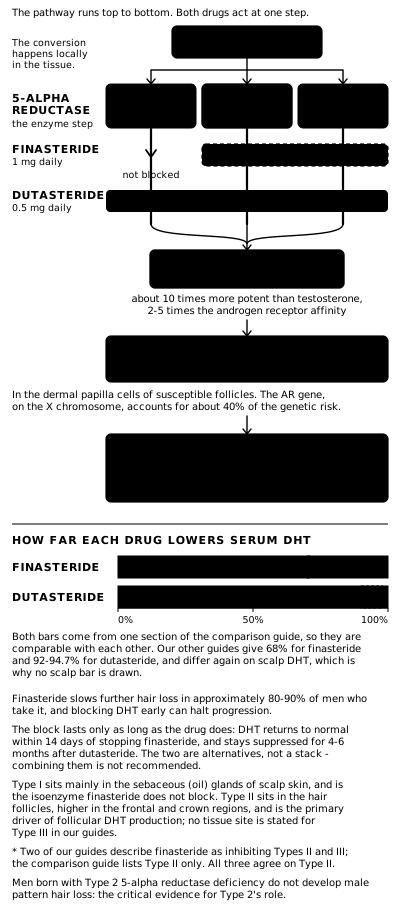
The key distinction lies in its potency and breadth of action. While finasteride inhibits only one type of the enzyme (Type II), dutasteride inhibits all three isoenzymes (Types I, II, and III). This broader inhibition results in significantly greater DHT suppression—up to 98% compared to finasteride's approximately 70%.
For hair loss treatment, dutasteride is used at a dose of 0.5 mg daily, though its long half-life allows for less frequent dosing in some protocols. While it's approved for treating androgenetic alopecia in Japan, South Korea, and Taiwan, it remains off-label for hair loss in the United States and many other countries.
Despite lacking FDA approval for hair loss specifically, dutasteride has become an increasingly popular option for men who haven't achieved satisfactory results with finasteride. Multiple clinical studies have demonstrated its superior efficacy in promoting hair regrowth.
Finasteride vs Dutasteride: Key Differences#
Understanding the differences between these two medications helps determine which might be more appropriate for your situation. Here's a comprehensive comparison:
| Factor | Finasteride | Dutasteride |
|---|---|---|
| Brand Name | Propecia | Avodart |
| Hair Loss Dose | 1 mg daily | 0.5 mg daily |
| FDA Approval (Hair) | Yes (since 1997) | No (off-label in US) |
| 5AR Types Blocked | Type II only | Types I, II, and III |
| DHT Reduction | ~70% | ~90-98% |
| Half-Life | 5-6 hours | ~5 weeks |
| Blood Donation Wait | 1 month | 6 months |
| Generic Available | Yes | Yes |
| Cost (Monthly) | $10-30 | $15-50 |
The most clinically significant differences are the degree of DHT suppression and the half-life. Dutasteride's more complete DHT blockade appears to translate into better hair outcomes, while its extraordinarily long half-life has implications for dosing flexibility, side effect persistence, and blood donation restrictions.
Mechanism Comparison: How Each Works#
Both medications work by inhibiting 5-alpha reductase, the enzyme that converts testosterone into DHT. However, they do so in importantly different ways.
Finasteride's Mechanism: Finasteride selectively inhibits Type II 5-alpha reductase, which is the predominant isoenzyme in hair follicles and the prostate. This selectivity made it an attractive option when it was developed—targeting hair follicle DHT while minimizing effects elsewhere. By blocking Type II, finasteride reduces scalp DHT by approximately 64% and serum DHT by about 70%.
Dutasteride's Mechanism: Dutasteride is a dual (or triple) inhibitor, blocking Types I, II, and III 5-alpha reductase. Importantly, it inhibits Type II approximately three times more potently than finasteride. The result is near-complete suppression of DHT production—up to 98% reduction in serum levels and proportionally greater reduction in scalp tissue.
Why This Matters: The Type I isoenzyme, which finasteride doesn't block, is present in sebaceous glands and contributes to some DHT production. By blocking all isoenzymes, dutasteride achieves more complete DHT suppression. For hair loss, this additional suppression appears to translate into measurably better results for many men.
The trade-off is that more complete DHT suppression may theoretically carry different risks, though clinical studies have generally shown comparable safety profiles between the two drugs.
DHT Reduction: The Numbers#
The degree of DHT suppression is perhaps the most important pharmacological difference between these medications. Here's what the research shows:
Finasteride (1 mg daily):
- Serum DHT reduction: 70-71%
- Scalp DHT reduction: ~64%
- Time to maximum suppression: Within days of starting
- Time to baseline after stopping: ~14 days
Dutasteride (0.5 mg daily):
- Serum DHT reduction: 90-98%
- Scalp DHT reduction: Significantly greater than finasteride
- Time to maximum suppression: Several weeks (due to accumulation)
- Time to baseline after stopping: 4-6 months
The difference is substantial. A man taking finasteride still has about 30% of his original DHT levels circulating; a man on dutasteride may have only 2-10%. For some men, especially those with aggressive hair loss or greater genetic sensitivity to DHT, this additional suppression can make a meaningful difference in outcomes.
It's worth noting that while near-complete DHT suppression sounds beneficial, DHT does serve functions in the adult male body. The clinical significance of reducing DHT by 98% versus 70% for long-term health remains an area of ongoing research.
Efficacy: What the Research Shows#
Multiple clinical studies have directly compared dutasteride and finasteride for hair loss treatment. The evidence consistently favors dutasteride for hair regrowth, though both medications are effective.
Meta-Analysis Results: A systematic review and meta-analysis comparing the two medications found:
- Mean difference in total hair count: +28.57 hairs favoring dutasteride
- Statistical significance: P < 0.00001 (highly significant)
- Investigator assessment: Favored dutasteride
- Panel global photographic assessment: Favored dutasteride
Randomized Controlled Trial (Head-to-Head): In a randomized, evaluator-blinded study directly comparing the medications:
- Dutasteride showed superiority in total hair count
- Greater improvement in hair thickness/diameter
- Better scores on standardized assessment photographs
- Patients rated their improvement higher on dutasteride
Long-Term Korean Study: A multicenter chart review study examining long-term outcomes found:
- Dutasteride demonstrated sustained effectiveness over extended use
- Safety profiles remained comparable to finasteride
- Real-world results aligned with clinical trial findings
The Bottom Line: If you're measuring purely by hair regrowth outcomes, dutasteride appears to be the more effective medication. However, this must be balanced against factors like FDA approval status, prescribing access, and individual response.
Head-to-Head Clinical Trial Results#
A 2025 randomized, investigator-blinded trial provides some of the most recent comparative data between dutasteride and finasteride, including novel intermittent dosing protocols:
Study Design:
- 60 men with androgenetic alopecia
- Three groups: dutasteride 0.5mg twice weekly, dutasteride 0.5mg thrice weekly, finasteride 1mg daily
- 24-week follow-up period
- Primary outcome: terminal hair count change
Results - Hair Count Changes:
| Treatment | Hair Count Change (hairs/cm²) |
|---|---|
| Dutasteride twice weekly | +7.74 |
| Dutasteride thrice weekly | +17.43 |
| Finasteride daily | +12.81 |
Clinical Improvement Ratings:
- Thrice-weekly dutasteride: 35% achieved moderate-to-marked improvement
- Daily finasteride: 21% achieved moderate-to-marked improvement
Key Implications: This study demonstrates that even with less frequent dosing (taking advantage of dutasteride's long half-life), results can match or exceed daily finasteride. The thrice-weekly dutasteride group showed the best outcomes, suggesting this may be an optimal dosing schedule that balances efficacy with potential side effect reduction.
For men concerned about side effects, the twice-weekly protocol offers an interesting option—lower cumulative exposure while still providing meaningful hair benefits.
Timeline: Results with Each Medication#
The timeline for seeing results differs somewhat between these medications due to their different pharmacokinetic profiles.
Finasteride Timeline:
- Week 1-4: DHT suppression begins within days
- Month 2-3: Some men notice reduced shedding
- Month 4-6: Earliest visible improvements may appear
- Month 12: Standard assessment point; 48% show regrowth
- Year 2: Peak results typically achieved
- If stopped: DHT returns to normal within 14 days; hair loss resumes within 12 months
Dutasteride Timeline:
- Week 1-4: DHT suppression begins but takes longer to reach maximum
- Month 2-3: DHT suppression approaching maximum levels
- Month 3-6: Effects on hair begin to manifest
- Month 6-12: Visible improvements more apparent
- Year 1-2: Peak results achieved
- If stopped: DHT remains suppressed for 4-6 months; longer transition back to baseline hair loss
Why Dutasteride Takes Longer Initially: Dutasteride's 5-week half-life means it takes several weeks of consistent dosing for serum levels to reach steady state. Once at steady state, its effects are more sustained—but the initial ramp-up period is longer than with finasteride.
Practical Implications: Men switching from finasteride to dutasteride shouldn't expect immediate dramatic improvement. The benefits of dutasteride emerge over months as it builds up in the system and further suppresses DHT beyond what finasteride achieved.
Side Effects Comparison#
One of the most important questions when comparing these medications is whether dutasteride's greater DHT suppression leads to more side effects. The clinical evidence suggests the side effect profiles are remarkably similar.
Clinical Trial Data:
| Side Effect | Dutasteride vs Finasteride | P-Value |
|---|---|---|
| Altered libido | No significant difference | P = 0.54 |
| Erectile dysfunction | No significant difference | P = 0.07 |
| Ejaculation disorders | No significant difference | P = 0.58 |
Common Side Effects (Both Medications):
- Decreased libido: 1-3%
- Erectile dysfunction: 1-2%
- Decreased ejaculate volume: 1-2%
- Breast tenderness/enlargement: ~1%
Important Distinctions:
Duration of Side Effects: Because dutasteride's half-life is so much longer (~5 weeks vs 6 hours), any side effects that do occur may persist longer after discontinuation. If you stop finasteride, most effects clear within days to weeks. With dutasteride, it can take months for the drug to fully clear your system.
Prostate Cancer Consideration: Both FDA labels include warnings about potential effects on prostate cancer detection and risk. Dutasteride's label specifically notes it may increase the risk of high-grade prostate cancer, though this finding comes from BPH studies in older men and its relevance to younger men using lower doses for hair loss is debated.
Real-World Safety: Long-term studies from countries where dutasteride is approved for hair loss (Japan, South Korea) have not revealed significant safety signals beyond what's seen with finasteride.
Half-Life and Dosing Implications#
The dramatic difference in half-life between these medications has several practical implications:
Half-Life Comparison:
- Finasteride: 5-6 hours (fully eliminated within days)
- Dutasteride: ~5 weeks (detectable for 4-6 months after stopping)
What This Means for Dosing:
Finasteride:
- Must be taken daily for consistent effect
- Missing doses leads to relatively quick DHT rebound
- Some men experiment with every-other-day dosing with mixed results
- Easier to adjust or stop if problems arise
Dutasteride:
- Long half-life allows for less frequent dosing
- 2-3 times weekly dosing may be as effective as daily
- Builds up slowly, takes weeks to reach full effect
- Takes months to clear if stopped
- Forgetting occasional doses has minimal impact
Intermittent Dosing Protocols: Because of its long half-life, many physicians prescribe dutasteride on non-daily schedules:
- Medium-dose: 0.5 mg 4-5 times per week
- Low-dose: 0.5 mg 2-3 times per week
Research suggests these intermittent schedules can be effective while potentially reducing side effect risk and cost.
Blood Donation Restriction: Men taking finasteride must wait 1 month after stopping before donating blood. For dutasteride, the wait is 6 months—due to the prolonged time the drug remains in circulation at levels that could affect a pregnant woman receiving a transfusion.
FDA Status and Off-Label Use#
Understanding the regulatory landscape helps explain why your doctor might prescribe one medication over the other.
Finasteride for Hair Loss:
- FDA-approved for androgenetic alopecia in men since December 1997
- Brand name Propecia (1 mg) specifically indicated for hair loss
- Widely prescribed, well-understood by most physicians
- Clear prescribing guidelines and extensive safety data
Dutasteride for Hair Loss:
- FDA-approved for BPH (2001), NOT for hair loss in the US
- Brand name Avodart (0.5 mg) indicated only for prostate
- Using for hair loss is "off-label" use in the US and Europe
- Approved specifically for hair loss in Japan, South Korea, and Taiwan
What "Off-Label" Means: Off-label prescribing is legal and common in medicine—it means using an FDA-approved drug for a condition it wasn't specifically approved for. Doctors can prescribe dutasteride for hair loss based on the evidence supporting its use, even though the FDA hasn't formally reviewed and approved it for that indication.
Why Isn't It FDA-Approved for Hair Loss? The likely reason is economic rather than scientific. Seeking FDA approval requires expensive clinical trials, and by the time robust hair loss data emerged, dutasteride was approaching patent expiration. Generics are now available, reducing the financial incentive for any company to pursue FDA approval for this indication.
Practical Implications:
- Some doctors are hesitant to prescribe off-label medications
- Insurance is less likely to cover off-label use
- You may need to find a provider comfortable with the evidence for hair loss
- Telehealth platforms increasingly offer dutasteride for hair loss
When to Choose Dutasteride Over Finasteride#
Dutasteride isn't typically a first-line treatment for most men with hair loss. Here's when it makes the most sense to consider it:
Good Candidates for Dutasteride:
1. Finasteride Non-Responders: Men who have taken finasteride consistently for 12+ months without adequate results may benefit from switching to dutasteride. Studies show many men who don't respond to finasteride do respond to dutasteride's more potent DHT suppression.
2. Aggressive Hair Loss: Men experiencing rapid or extensive hair loss may benefit from maximum DHT suppression from the start. Some physicians recommend dutasteride for more severe cases.
3. Preference for Less Frequent Dosing: If taking a daily pill is challenging, dutasteride's long half-life allows effective treatment with 2-3 doses per week.
4. Young Men with Strong Family History: Men with early-onset hair loss and strong genetic predisposition may consider more aggressive treatment, though this should be discussed carefully with a physician.
When Finasteride Remains Preferred:
1. First-Time Treatment: Most experts recommend trying finasteride first since it's FDA-approved, well-studied, and effective for most men.
2. Concern About Side Effect Duration: If you want the option to quickly discontinue treatment if problems arise, finasteride's short half-life is advantageous.
3. Planning to Donate Blood: The shorter blood donation restriction with finasteride may matter to regular donors.
4. Prescriber Limitations: If your doctor is unwilling to prescribe off-label, finasteride is the accessible option.
Switching from Finasteride to Dutasteride#
If finasteride isn't providing adequate results, switching to dutasteride is a common next step. Here's what to know:
When to Consider Switching:
- After 12+ months on finasteride with continued significant hair loss
- When stabilization occurs but desired regrowth doesn't
- If hair loss accelerates despite finasteride use
- When maximum DHT suppression is desired
How to Switch:
Option 1: Direct Switch Simply stop finasteride and start dutasteride (0.5 mg daily or per your doctor's schedule). There's no need for a washout period—dutasteride will take over DHT suppression as finasteride clears.
Option 2: Overlap Period Some physicians recommend continuing finasteride for a few weeks while starting dutasteride. This maintains DHT suppression during the transition period while dutasteride builds to therapeutic levels.
What to Expect:
- Initial period: No dramatic changes expected
- Months 1-3: Dutasteride accumulating, DHT suppression increasing
- Months 3-6: May notice enhanced results versus finasteride alone
- Month 12+: Full assessment of whether switch improved outcomes
Research on Switching: A study specifically examining men who were "recalcitrant to finasteride" (didn't respond adequately) found that many of these non-responders showed improvement after switching to dutasteride. This suggests the additional DHT suppression can make a difference for some finasteride non-responders.
Important Note: Not everyone who doesn't respond to finasteride will respond to dutasteride. Some men's hair loss may be driven by factors beyond DHT, or their follicles may be beyond the point of recovery. Managing expectations is important when making any treatment change.
Cost and Availability Comparison#
Practical considerations like cost and ease of obtaining a prescription often influence treatment decisions.
Cost Comparison:
| Factor | Finasteride | Dutasteride |
|---|---|---|
| Brand Monthly | $70-90+ (Propecia) | $60-80+ (Avodart) |
| Generic Monthly | $10-30 | $15-50 |
| 90-Day Supply | Better value | Better value |
| Insurance Coverage | Sometimes (off-label) | Rarely (off-label use) |
Availability:
Finasteride:
- Easy to obtain from dermatologists, primary care, telehealth
- Generic widely stocked at pharmacies
- Many online platforms offer consultations and prescriptions
- Insurance may partially cover (varies by plan)
Dutasteride:
- Requires provider willing to prescribe off-label
- Some physicians unfamiliar with hair loss indication
- Generic available but may need special ordering
- Telehealth platforms increasingly offering it
- Insurance coverage unlikely for hair loss indication
Tips for Affordability:
- Use generic versions of either medication
- Compare prices across pharmacies (significant variation exists)
- Consider 90-day supplies for better per-pill pricing
- Check manufacturer patient assistance programs
- GoodRx and similar discount cards can reduce costs
FAQs#
Is dutasteride better than finasteride for hair loss?#
Clinical studies consistently show dutasteride produces better hair regrowth results—approximately 28 more hairs in measured areas compared to finasteride. However, "better" depends on your definition. Finasteride is FDA-approved, easier to obtain, has a shorter half-life if you need to stop, and works well for most men. Dutasteride may be better for those who don't respond adequately to finasteride.
Can I take dutasteride every other day instead of daily?#
Yes, and research supports this approach. Because dutasteride has a 5-week half-life, 2-3 times weekly dosing can be effective. A 2025 study showed thrice-weekly dutasteride (0.5mg) produced better results than daily finasteride (1mg) at 24 weeks.
Why isn't dutasteride FDA-approved for hair loss?#
The likely reason is economic. Seeking FDA approval is expensive, and by the time strong hair loss data emerged, dutasteride was nearing patent expiration. No company has financial incentive to pursue approval now that generics are available. It is approved for hair loss in Japan, South Korea, and Taiwan.
Are dutasteride side effects worse than finasteride?#
Clinical trials comparing the two have not found significant differences in sexual side effect rates. The main difference is duration—dutasteride's long half-life means side effects may persist longer if they occur. Overall safety profiles are comparable.
How long does it take to see results from dutasteride?#
Due to its long half-life, dutasteride takes several weeks to reach steady-state levels. Expect 6-12 months of consistent use before assessing results. If switching from finasteride, the additional benefits of dutasteride typically become apparent after 3-6 months.
Can I switch from finasteride to dutasteride?#
Yes, this is a common approach for men who don't get adequate results from finasteride alone. You can switch directly without a washout period. Some physicians recommend a brief overlap period to maintain DHT suppression during transition.
Do I need to stop finasteride before donating blood?#
Yes. The waiting period is 1 month for finasteride and 6 months for dutasteride. Both medications can cause birth defects if a pregnant woman is exposed through blood transfusion.
Should I start with dutasteride instead of finasteride?#
Most experts recommend trying finasteride first since it's FDA-approved, easier to access, and effective for most men. Dutasteride is typically reserved for those who don't respond adequately to finasteride or have particularly aggressive hair loss.
References
- PMC. Comparison between dutasteride and finasteride in hair regrowth and reversal of miniaturization in male and female androgenetic alopecia: a systematic review. 2024. PMC
- PMC. Long-Term Effectiveness and Safety of Dutasteride versus Finasteride in Patients with Male Androgenic Alopecia in South Korea: A Multicentre Chart Review Study. 2022. PMC
- U.S. Food and Drug Administration. AVODART (dutasteride) soft gelatin capsules label. 2020. FDA
- Dhurat RS, et al. Superiority of dutasteride over finasteride in hair regrowth and reversal of miniaturization in men with androgenetic alopecia: A randomized controlled open-label, evaluator-blinded study. 2016. PubMed
- PMC. The efficacy and safety of dutasteride compared with finasteride in treating men with androgenetic alopecia: a systematic review and meta-analysis. 2019. PMC
- Olszewska M, et al. Efficacy and safety of twice- or thrice-weekly dutasteride versus daily finasteride in men with androgenetic alopecia. 2025. PMC
- Eun HC, et al. Efficacy, safety, and tolerability of dutasteride 0.5 mg once daily in male patients with male pattern hair loss: a randomized, double-blind, placebo-controlled, phase III study. 2010. PubMed
- Zito PM, Syed K. Dutasteride. StatPearls. 2024. NCBI
- Zito PM, Bistas KG, Syed K. Finasteride. StatPearls. 2024. NCBI
- Olsen EA, et al. Effect of dutasteride 0.5 mg/d in men with androgenetic alopecia recalcitrant to finasteride. 2014. PubMed
Medical Disclaimer: This content is for informational purposes only and is not a substitute for professional medical advice, diagnosis, or treatment. Always consult a qualified healthcare provider before starting any medication.