Ferritin and Hair Loss: Optimal Levels for Hair Growth (2026)
2,726 words·Compiled from cited medical literature·Not medical advice
On this page 11 sections
- Who This Guide Is For
- Understanding Ferritin and Hair Health
- The Critical Distinction: Laboratory Normal vs. Hair Optimal
- Iron Deficiency Without Anemia: The Hidden Problem
- Testing: Getting the Right Information
- Supplementation: The Evidence-Based Approach
- When Low Ferritin Isn't the Whole Story
- Monitoring and Follow-Up
- Safety Considerations
- Putting It All Together
- Frequently Asked Questions
Ferritin and Hair Loss: The Iron Connection
Who This Guide Is For#
This guide IS for you if:
- You're experiencing unexplained diffuse hair shedding
- Your ferritin has tested low or in the lower range of "normal"
- You want to understand the relationship between iron and hair health
- You're considering iron supplementation for hair growth
- You want to know what ferritin levels actually support healthy hair
This guide is NOT for you if:
- You have patchy or localized hair loss (different cause)
- You've been diagnosed with hemochromatosis or iron overload
- You're looking for hair loss treatment beyond iron optimization
- You need guidance on iron infusions (consult your doctor)
- You're pregnant or have other conditions affecting iron needs
Understanding Ferritin and Hair Health#
What Ferritin Is and Why It Matters for Hair#
Ferritin is the protein that stores iron in your body's tissues. While hemoglobin measures the iron in your blood carrying oxygen, ferritin measures your iron reserves—the stored supply your body draws on for various functions, including hair production.
Hair follicles are highly metabolically active and require adequate iron to function. Iron is involved in:
- DNA synthesis in rapidly dividing hair matrix cells
- Oxygen transport to follicles
- Energy production for the growth cycle
- Enzyme functions essential for hair protein synthesis
When ferritin drops, your body prioritizes vital functions over hair growth. Hair follicles may enter the resting (telogen) phase prematurely, leading to increased shedding and eventual thinning.
The 70% Connection - How Common Is Iron-Related Hair Loss?#
Research suggests that approximately 70% of female alopecia cases are iron deficiency-related. This striking statistic highlights how frequently iron plays a role in women's hair loss—often unrecognized because standard laboratory thresholds don't account for hair health.
The connection is particularly relevant because:
- Women lose iron through menstruation monthly
- Dietary iron absorption is inefficient (only 10-20%)
- Hair loss can occur long before anemia develops
- Standard "normal" ferritin ranges were established without considering hair health
Many women with hair loss have ferritin levels that laboratories label "normal" but that fall far short of what hair follicles need to function optimally.
The Critical Distinction: Laboratory Normal vs. Hair Optimal#
Why "Normal" Ferritin Isn't Enough for Hair#
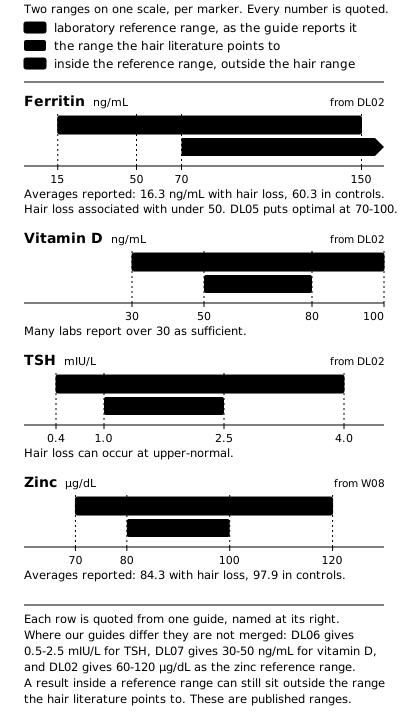
Standard laboratory reference ranges for ferritin typically start at 10-15 ng/mL as the lower limit of normal. However, these ranges were established to identify iron deficiency anemia—not to assess whether iron stores are adequate for optimal hair growth.
Research reveals the problem with these cutoffs:
- Using 10-15 ng/mL as normal yields only 59% sensitivity for detecting iron deficiency
- Using 41 ng/mL as the cutoff yields 98% sensitivity and 98% specificity
- Hair-optimal ferritin levels are significantly higher than anemia-prevention levels
A ferritin of 15 ng/mL might be "normal" by laboratory standards, but it's far from optimal for your hair. This disconnect explains why many people with hair loss are told their iron levels are "fine" when they're actually suboptimal for hair health.
The Hair-Optimal Ferritin Ranges#
Based on clinical research focused on hair outcomes, here's how to interpret your ferritin level:
Critical deficiency (<20 ng/mL): Hair loss very likely to be occurring or imminent. At this level, iron stores are depleted to the point where follicle function is significantly impaired.
Suboptimal (20-40 ng/mL): Hair loss probable or contributing factor. Follicles may not have enough iron to maintain optimal growth cycles.
Adequate for hair (40-60 ng/mL): Minimum level to support hair growth. This is the threshold where hair follicles have enough iron to function, though higher is better.
Good for hair (60-70 ng/mL): Supports healthy hair growth. Most dermatologists specializing in hair loss target this range as a minimum.
Optimal for hair (70-100 ng/mL): Ideal for hair density and growth. Research suggests best outcomes at ferritin levels of 70 ng/mL or higher.
Iron Deficiency Without Anemia: The Hidden Problem#
Why Your Blood Counts May Be "Normal"#
A critical concept: you can have iron deficiency affecting your hair without having anemia. This is because iron stores (ferritin) drop long before hemoglobin and red blood cell counts become abnormal.
The typical progression of iron depletion:
- Stage 1: Iron stores (ferritin) begin to fall
- Stage 2: Iron available for use (serum iron, transferrin saturation) decreases
- Stage 3: Hemoglobin finally drops (anemia develops)
Hair loss can begin at Stage 1—months or years before anemia would appear on standard blood tests. If your doctor only checks hemoglobin or complete blood count (CBC), iron deficiency affecting your hair could be missed entirely.
This explains why many women with hair shedding have "normal" CBC results but respond dramatically to iron supplementation when their ferritin is tested and found to be low.
Who Is at Risk for Low Ferritin?#
Several factors increase risk of ferritin depletion:
Menstruating women: Monthly blood loss depletes iron stores. Heavy periods significantly increase risk.
Vegetarians and vegans: Plant-based iron (non-heme) is absorbed less efficiently than meat-based iron (heme).
Frequent blood donors: Each donation removes approximately 200-250 mg of iron.
Endurance athletes: Intense exercise increases iron loss through sweat, GI tract, and hemolysis.
Those with digestive conditions: Celiac disease, inflammatory bowel disease, and gastric bypass reduce iron absorption.
Pregnant and postpartum women: Pregnancy dramatically increases iron needs; postpartum hair loss often has an iron component.
Testing: Getting the Right Information#
Which Tests to Request#
For a complete picture of your iron status and its relationship to hair health, request:
Essential tests:
- Ferritin: The most important marker for hair-related iron status
- Complete Blood Count (CBC): Includes hemoglobin, hematocrit, MCV (mean corpuscular volume)
Helpful additional tests:
- Serum iron: Amount of iron circulating in blood
- Total Iron Binding Capacity (TIBC): How much iron your blood could carry
- Transferrin saturation: Percentage of transferrin carrying iron (calculated from serum iron and TIBC)
Why ferritin alone isn't always enough: Ferritin is an acute-phase reactant, meaning it can be falsely elevated by inflammation, infection, or liver disease. If you have inflammation (high CRP or ESR), your ferritin might appear higher than your true iron stores. Additional iron markers help clarify the picture.
How to Interpret Your Results#
Interpreting ferritin for hair health:
- Below 30 ng/mL: Hair loss very likely iron-related; supplementation strongly indicated
- 30-50 ng/mL: May be contributing to hair loss; supplementation likely beneficial
- 50-70 ng/mL: Suboptimal for hair; consider supplementation
- Above 70 ng/mL: Adequate for hair growth; look for other causes if hair loss persists
Red flags for further investigation:
- Ferritin above 200 ng/mL without supplementation (may indicate iron overload or inflammation)
- Very low ferritin with normal or high hemoglobin (inflammation may be masking iron deficiency)
- Ferritin doesn't respond to supplementation (absorption issues possible)
Supplementation: The Evidence-Based Approach#
Iron Supplementation Protocols#
When ferritin is low, oral iron supplementation is typically the first-line treatment. Key considerations:
Forms of iron:
- Ferrous sulfate: Most studied, affordable, but can cause GI side effects
- Ferrous gluconate: Slightly gentler on stomach
- Ferrous fumarate: Higher elemental iron content
- Iron bisglycinate: Better tolerated, good absorption, fewer side effects
Dosing considerations: Research shows that every-other-day dosing may be more effective than daily dosing for absorption. A 2021 meta-analysis found that 65 mg elemental iron every other day raised ferritin by 30 ng/mL after 8 weeks.
Absorption enhancers:
- Take with vitamin C (enhances iron absorption)
- Take on an empty stomach when tolerable
- Avoid taking with calcium, coffee, or tea (reduce absorption)
What to avoid:
- Don't take iron with dairy products
- Separate from calcium supplements by 2+ hours
- Don't exceed recommended doses without medical supervision
Expected Timeline and Response#
Understanding realistic timelines prevents disappointment:
Weeks 4-8: Ferritin levels begin to rise. Expect 10-20 ng/mL increase per month with adequate dosing.
Weeks 6-8: Shedding typically begins to slow. The daily hair count in your brush or shower drain should decrease.
Months 3-6: Visible new growth appears. Baby hairs become noticeable, particularly at the hairline. One study found 90% of women saw visible baby hairs once ferritin crossed 40 ng/mL.
Months 9-12: Full density recovery. Complete restoration depends on baseline deficiency severity, genetics, and whether other factors are contributing.
Important: Continue supplementation for at least 3 months after ferritin normalizes to fully replenish tissue iron stores.
When Low Ferritin Isn't the Whole Story#
Understanding Multifactorial Hair Loss#
Hair loss is rarely caused by a single factor. Even when ferritin is low, other issues may be contributing:
Common co-contributors:
- Androgenetic alopecia (genetic pattern loss)
- Thyroid dysfunction
- Vitamin D deficiency (often co-exists with iron deficiency)
- Hormonal changes
- Chronic stress
- Other nutritional deficiencies (B12, zinc)
What this means for treatment: Optimizing ferritin is necessary but may not be sufficient if other factors are present. If hair loss continues or doesn't fully resolve after 6-12 months of optimized ferritin, further evaluation is warranted.
When Ferritin Is Normal and Hair Loss Persists#
If your ferritin is genuinely optimal (70+ ng/mL) and hair loss continues:
Consider:
- The diagnosis may not be iron-related
- Other deficiencies may be present (vitamin D, B12, zinc)
- Androgenetic alopecia or other conditions may be the primary cause
- Hormonal evaluation may be needed
- Thyroid function should be checked
Remember: Low ferritin is a common cause of hair loss, but not the only cause. Proper diagnosis ensures appropriate treatment.
Monitoring and Follow-Up#
Retesting Protocol#
Systematic monitoring ensures you're on track:
Initial retest: 8-12 weeks after starting supplementation. Ferritin should be rising; if not, review dose, timing, and absorption factors.
Goal achieved: Once ferritin reaches optimal range (70+ ng/mL), continue supplementation for 3 additional months, then reduce to maintenance.
Maintenance monitoring: Check ferritin every 6-12 months to ensure levels are maintained, especially if you have ongoing risk factors (menstruation, dietary restrictions).
When to stop supplementation: Once ferritin is stable in the optimal range and you've completed the maintenance period. Continue maintenance supplementation if risk factors persist.
Signs of Improvement to Track#
Document your progress:
Hair metrics:
- Hair count in shower drain or brush (should decrease)
- Photos of part line and hairline (compare monthly)
- Ponytail thickness (if applicable)
- New baby hairs at hairline and part
Other improvements (often noticed before hair changes):
- Energy levels
- Exercise tolerance
- Nail strength
- Mental clarity
Safety Considerations#
Risks of Iron Supplementation#
Iron supplementation is safe for most people with documented deficiency, but considerations include:
GI side effects: Constipation, nausea, and stomach upset are common. Strategies include taking with food (reduces absorption slightly but improves tolerance), using gentler forms like iron bisglycinate, and every-other-day dosing.
Iron overload risk: Excessive iron supplementation can lead to iron overload, which damages organs. Always test before supplementing, and monitor ferritin during supplementation.
Contraindications: Hemochromatosis (hereditary iron overload), thalassemia, and certain other conditions require medical supervision for any iron supplementation.
Drug interactions: Iron can interact with certain medications including thyroid hormones, antibiotics, and antacids. Separate administration by 2+ hours.
Important: Never supplement iron without testing. Self-treating without knowing your levels risks both under-treatment and potentially harmful over-supplementation.
Putting It All Together#
Your Iron Optimization Action Plan#
Step 1: Test comprehensively Request ferritin (at minimum) along with CBC. For a complete picture, include serum iron, TIBC, and transferrin saturation.
Step 2: Interpret correctly Don't accept "normal" if your ferritin is below 70 ng/mL and you're experiencing hair loss. Lab reference ranges are for anemia detection, not hair health optimization.
Step 3: Supplement appropriately If ferritin is low, work with your healthcare provider on an evidence-based supplementation plan. Consider form, timing, and absorption optimization.
Step 4: Monitor progress Retest at 8-12 weeks. Track shedding, take photos, and document improvements.
Step 5: Maintain and evaluate Continue supplementation until stores are replenished (3+ months after reaching optimal levels). If hair loss persists despite optimal ferritin, investigate other causes.
Frequently Asked Questions#
What ferritin level is needed to stop hair loss?#
Most dermatologists targeting hair health aim for ferritin of at least 40-60 ng/mL to stop active shedding, with 70 ng/mL or higher optimal for regrowth. Laboratory "normal" (10-15 ng/mL) is insufficient for hair health. If your ferritin is below 30 ng/mL, hair loss is very likely being affected.
How long does it take for hair to grow back after fixing iron deficiency?#
Shedding typically slows within 6-8 weeks of starting iron supplementation. Visible new growth appears at 3-6 months. Full density recovery takes 9-12 months. Timeline depends on how depleted your iron stores were and whether other factors are contributing.
Can I have iron deficiency hair loss without being anemic?#
Yes, this is common. Iron stores (ferritin) deplete long before anemia develops. Many women have low ferritin causing hair loss while their hemoglobin and CBC remain "normal." This is why testing ferritin specifically—not just a CBC—is essential for hair loss evaluation.
What's the best iron supplement for hair growth?#
Iron bisglycinate is often recommended for hair patients because it's well-absorbed and causes fewer GI side effects than ferrous sulfate. However, ferrous sulfate is more studied and affordable. The best supplement is one you'll take consistently. Every-other-day dosing may improve absorption.
How much iron should I take daily for hair loss?#
This depends on your ferritin level and should be determined with your healthcare provider. A common protocol is 65 mg elemental iron every other day, which raised ferritin by 30 ng/mL over 8 weeks in clinical studies. Higher doses aren't necessarily better and increase side effect risk.
Will my hair grow back completely after iron deficiency?#
Hair loss from iron deficiency is generally reversible once levels are optimized. Most people recover full density within 9-12 months. However, if iron deficiency coexists with other conditions (like androgenetic alopecia), regrowth may be incomplete, and additional treatments may be needed.
Why is my ferritin low when I eat meat?#
Even with adequate dietary intake, several factors can cause low ferritin: heavy menstrual periods, poor absorption (GI conditions, coffee/tea with meals), increased needs (exercise, pregnancy), or chronic blood loss. Testing identifies the issue; your doctor can help investigate the cause.
Should I take iron if my ferritin is "normal" but hair is falling out?#
If your ferritin is in the lower range of "normal" (under 50-70 ng/mL), optimization may help your hair even if you're not technically deficient. However, don't supplement without testing, and consider whether other factors may be causing your hair loss. Work with a healthcare provider.
References
- PMC - Diagnosis and Treatment of Female Alopecia Focusing on Iron Deficiency (Clinical Guidelines)
- PMC - The Diagnostic Value of Serum Ferritin for Telogen Effluvium (Cross-Sectional Study)
- PMC - Serum Ferritin and Vitamin D in Diffuse Hair Loss Patients
- PMC - Iron Deficiency and Nonscarring Alopecia (Systematic Review & Meta-Analysis)
- MDedge/Cutis - Serum Ferritin Levels: A Clinical Guide in Hair Loss Patients
- Cleveland Clinic - Iron Deficiency and Hair Loss
- Hair GP - Iron Deficiency Hair Loss Guide
- Wimpole Clinic - Iron Tablets and Hair Loss Timeline
- London Dermatology Centre - Alopecia and Iron Deficiency
- Eureka Health - Ferritin and Hair Regrowth Guide
Medical Disclaimer: This article provides educational information about the relationship between iron/ferritin levels and hair health. It is not intended as medical advice and does not replace professional diagnosis or treatment. Do not begin iron supplementation without testing. Consult a healthcare provider for personalized recommendations.